Auto Ballpoint: A Handwritten Font That Sells Your Craft
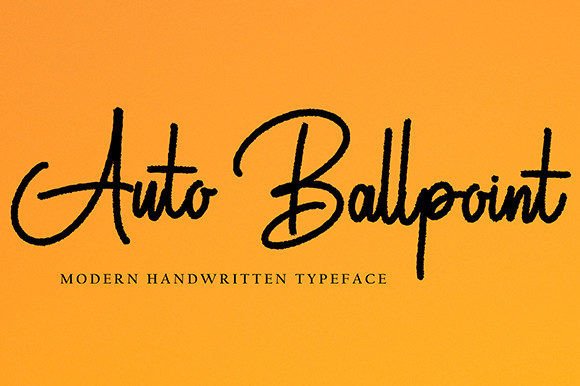
If you’ve ever spent hours tweaking a label, re-cutting a sticker because the script looked too stiff—or worse, too messy—you’ll love Auto Ballpoint. This isn’t just another decorative script font. It’s a modern handwritten typeface designed with real craft production in mind: clean entry points for cutting machines, consistent baseline alignment, and just the right amount of personality without sacrificing readability.
As a maker who designs printable wall art, hand-poured candle labels, and wedding invitation suites, I need fonts that look handmade but behave professionally. Auto Ballpoint delivers that balance. Its strokes flow like ink on paper—slight variation in line weight, gentle tapering, and subtle bounce—but never at the expense of clarity. There’s no excessive flourishes or unpredictable swashes that break when scaled down to 8pt on a tea towel tag or misalign in Silhouette Studio. That reliability is why it lives in my go-to folder alongside my most-used Script Amp fonts.
I reach for Auto Ballpoint first when designing anything that needs warmth and intention: boutique product tags, greeting cards with heartfelt messages, farmhouse-style chalkboard signs, or minimalist wedding welcome boards. It reads as approachable but polished—perfect for small-batch brands that want to feel personal without looking DIY-unrefined. On a matte black candle label with gold foil stamping? It adds quiet luxury. On a kraft paper gift tag tied to a handmade soap bar? It whispers care and craftsmanship.
For digital printables and SVG-style designs, Auto Ballpoint shines in headers, quotes, and focal phrases—not long paragraphs. It’s built as a display font, so I use it for titles, names, and short impactful lines: “Hand-Poured in Portland,” “Est. 2021,” “You Are Loved.” I avoid using it for body text or ingredient lists (that’s where a clean sans serif like Montserrat or Lato comes in), but as a pairing partner? It’s golden. Try Auto Ballpoint for your headline + a light-weight sans serif for supporting details. Or pair it with a soft serif like Playfair Display for vintage-inspired stationery—it grounds the script without competing.
Real-world examples from my shop: a set of printable planner stickers where Auto Ballpoint anchors weekly affirmations (“Breathe Deeply,” “Done Is Better Than Perfect”); holiday mugs where “Merry & Bright” curves gently around the handle; lavender-scented sachet tags with “Hand-Tied with Care”; and seasonal SVG bundles for Cricut users—especially popular for spring garden signs and autumn market banners. Each time, customers comment on how “real” the handwriting feels—not traced, not robotic, but authentically human.
Readability matters most when your font hits physical materials. Auto Ballpoint holds up beautifully at small sizes: I’ve printed it crisp at 6pt on 1” round stickers (for jar labels), cut it cleanly at 12mm height on vinyl for tote bag transfers, and used it in mockups for Etsy listings where legibility in thumbnail previews makes or breaks a click. The letters don’t bleed or blur on uncoated paper, and the spacing stays generous enough to prevent visual crowding—even in all-caps settings like “WELCOME” on a wooden door hanger.
Inside the Auto Ballpoint package, you’ll find OpenType features that elevate your work: standard ligatures for smoother joins (like “fi” and “fl”), stylistic alternates for customizing letterforms, and optional swashes for special occasions—think a single elegant “&” in a wedding monogram or a graceful exit stroke on the final letter of “Thank You.” File formats include OTF and TTF, compatible with Cricut Design Space, Silhouette Studio, Canva, Adobe Illustrator, and Procreate. While it supports major Western European languages, double-check multilingual needs if you’re creating bilingual product packaging or international printables.
One practical note every seller should know: Auto Ballpoint includes a commercial license. That means you can use it to design and sell physical products (stickers, mugs, apparel), digital downloads (printables, Canva templates, SVG bundles), client work (logo design, branding kits), and even merchandise like embroidered patches or enamel pins—no extra fees or attribution required. Just keep your end product original: you’re licensing the font, not reselling the font files themselves.
What sets Auto Ballpoint apart in my workflow isn’t just aesthetics—it’s how it helps me communicate value before a customer reads a single word. A handwritten font signals attention to detail. It tells people this wasn’t mass-produced. It says “I made this for you,” whether they’re holding a birthday card, scanning your Instagram story, or unwrapping a gift box. In a crowded marketplace, that emotional resonance converts.
I’ve tested dozens of script fonts over the years—some too delicate for cutting, some too rigid for invitations, some missing essential characters or failing on screen previews. Auto Ballpoint avoids those pitfalls. It’s versatile enough for spring florals and winter holidays, sturdy enough for product labels and soft enough for love notes. And because it’s part of the Script Amp collection, it fits seamlessly into my broader font library—never clashing, always complementing.
Whether you’re sketching ideas in a notebook or prepping files for print-on-demand, Auto Ballpoint gives your work a grounded, intentional voice. Not flashy. Not fussy. Just quietly confident—like the best handmade goods always are.